A green data center is a facility built to use energy-efficient technology and, often, renewable power. The best fit for buyers is a host that publishes measured PUE, WUE and renewable-share figures with their scope, not just a green label.
This guide turns that idea into a checklist. It sits alongside our explanation of how data centers work and focuses on the claims a hosting buyer can actually test: efficiency, renewable sourcing, water and carbon.
Selection criteria for judging a green host
Green web hosting is a marketing phrase until a provider backs it with numbers. Use these tests in order when you compare providers.
- Measured, not asserted. Prefer a host that reports a metric such as PUE, WUE or renewable share over one that says only that it is eco-friendly.
- Scope stated. PUE is used only to indicate the additional energy consumption of the building and cooling infrastructure, so a figure means little unless you know what it covers, as the Borderstep summary of EU data centre statistics explains.
- Instrument named. A renewable claim should say whether it rests on contracted generation, certificates or both.
- Indicators read together. The same Borderstep summary warns that increases in PUE efficiency can have unintended consequences for other sustainability indicators, so one good number never settles the question.
The practices below are not ranked. Each answers a different question, so treat them as a checklist rather than a league table.
Energy efficiency and waste heat
Power usage effectiveness (PUE)
Power usage effectiveness divides total data center energy by the energy used by IT equipment, and a value closer to 1 is more efficient, according to IBM’s overview of green data centers. IBM also credits The Green Grid, a non-profit association, with developing PUE and its sibling metrics.
For context, the EU-wide average PUE in reporting is 1.36, with member states ranging from 1.15 to 1.66, per the Borderstep summary of the 2025 EU assessment. A host well inside that range is competitive on overhead. A host that quotes only its best-case hall or a design target tells you less than one reporting a measured facility figure.
PUE suits buyers who want a quick comparison of overhead between facilities. It does not tell you where the electricity came from or how much water the cooling consumed.
Waste heat reuse
Data centres currently reuse only around 1.8 percent of their waste heat, according to the same Borderstep summary. Energy reuse effectiveness (ERE) quantifies how efficiently waste energy generated within a data center is reused, as Device42’s green data center guide describes.
Because reuse is so uncommon, a host that can show a working heat-reuse arrangement stands out. Treat it as a differentiator rather than a requirement, and ask for the arrangement’s scale instead of accepting a general statement.
Renewable sourcing and certificates
Renewable share and what it counts
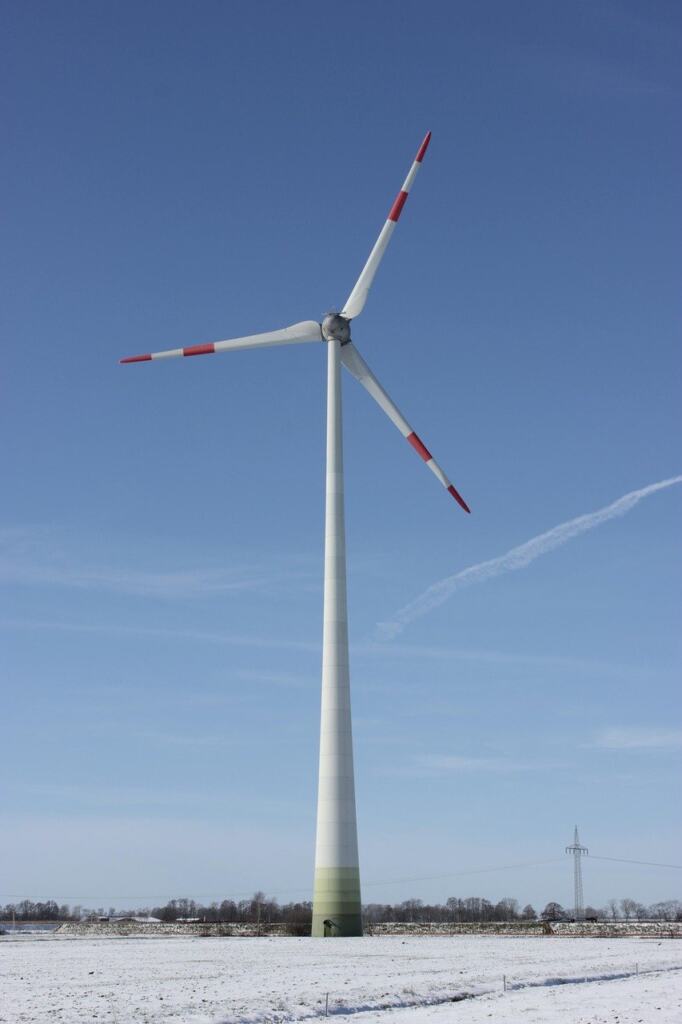
Green data centers often use energy sourced from renewable sources like solar and wind power, per IBM. The renewable energy usage metric quantifies the percentage of renewable energy sources a data center uses, as Device42 notes.
The EU renewable energy factor for data centres is 0.86 (86 percent) when certificates of origin are included, according to Borderstep. For comparison, the renewable share of total electricity consumption in the EU is currently around 45 per cent. The gap shows why the definition matters: a high renewable figure may include certificates as well as power supplied directly.
Certificates versus power purchase agreements
A renewable energy certificate is a record of renewable generation that a buyer can claim. A power purchase agreement (PPA) is a contract to buy electricity from a renewable generator. The two can support the same headline percentage while meaning different things, so ask which one stands behind the figure.
The practical test is simple. A host citing certificates should say which certificates and for what period. A host citing a PPA should name the project or source type and say how much of the facility’s consumption it covers. Certificates of origin, as the EU factor above shows, are counted in the standard definition, so a number alone does not reveal the mix.

Contracted and on-site generation
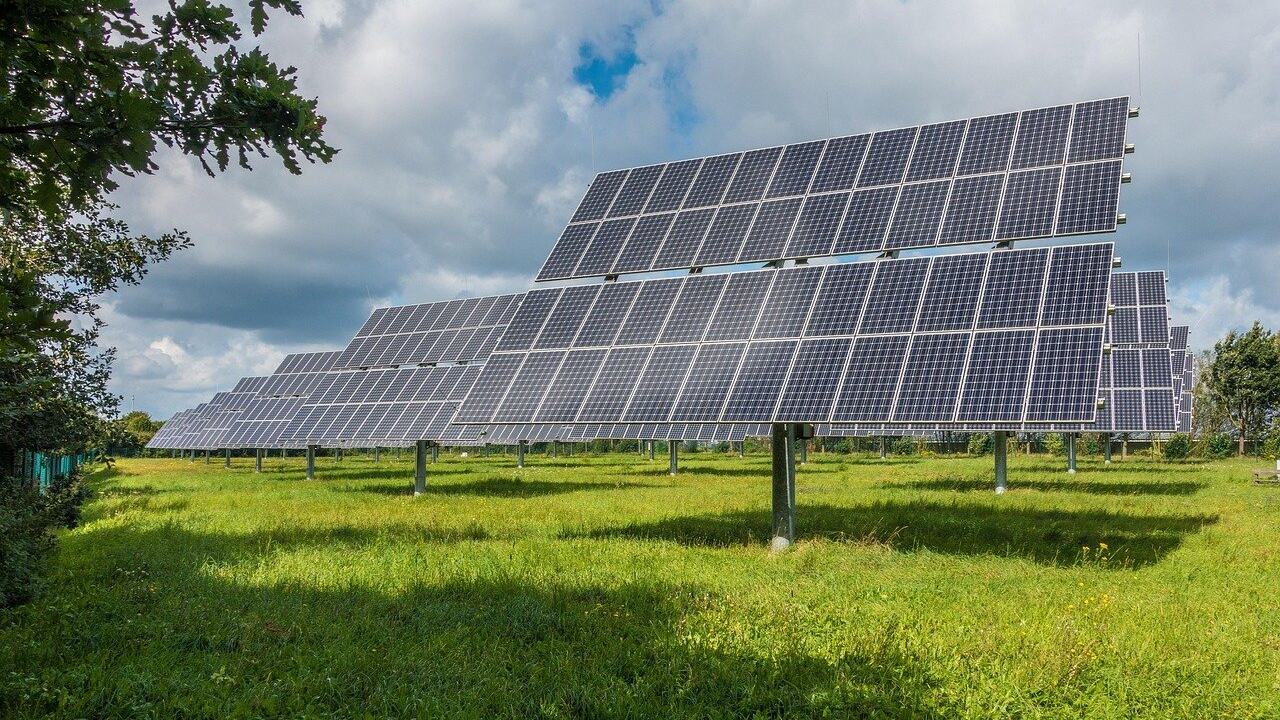
Solar and wind are the sources most often cited, so ask a host which one it relies on and how much of its annual consumption each one covers. Generation beside a facility is easy to picture, but a claim should still state its share of total demand rather than imply it powers the whole site.

Water use and cooling
Water usage effectiveness (WUE)
Data centers require substantial amounts of water for cooling, per Device42. Water usage effectiveness expresses that use in cubic metres per megawatt hour of IT energy (m3/MWh), and lower is more water-efficient, according to Borderstep.
The EU as a whole has a WUE of 0.58 m3/MWh, and member-state values range from 0.07 to 1.28 m3/MWh. A host reporting a figure at the low end of that range is using little water per unit of IT energy. One reporting nothing leaves the question open.
Cooling method and water scarcity
Cooling technology drives the number. Facilities using evaporative systems consume a lot of water, while dry coolers use little or none. The trade-off is that dry cooling can raise electricity use, which is one reason PUE and WUE should be read together.
WUE also does not show what type of water is used or how scarce water is in the region. A low figure in a water-stressed area still deserves a follow-up question about the water source.
Carbon claims
Carbon neutral hosting
A carbon neutral claim describes net emissions, not how the electricity was generated. Carbon usage effectiveness (CUE) is the measurable counterpart: CO2 emissions caused by total data center energy divided by the energy consumed by IT equipment, as IBM defines it.
Ask a host claiming neutrality for its CUE or an equivalent emissions-per-IT-energy figure, and for the electricity sourcing behind it. If the host cannot separate emissions it avoided from emissions it compensated for, the label is weaker than it sounds.
Comparison of green data center metrics
| Metric | What it measures | Reference value | Planning use |
|---|---|---|---|
| PUE | Total facility energy relative to IT energy | EU average 1.36; member states 1.15 to 1.66 | Compare overhead between facilities, remembering it covers building and cooling only |
| WUE | Water used per MWh of IT energy | EU average 0.58 m3/MWh; member states 0.07 to 1.28 m3/MWh | Compare water efficiency, then ask about cooling type and local scarcity |
| Renewable energy factor | Share of renewable energy including certificates of origin | EU data centres 0.86; EU electricity overall around 45 per cent renewable | Ask what portion is certificates and what portion is contracted supply |
| CUE | CO2 emissions relative to IT energy | Ratio of emissions to IT energy, per The Green Grid family of metrics | Test a carbon neutral claim against actual emissions per unit of IT energy |
| Waste heat reuse | Share of waste heat put to use | About 1.8 percent across data centres | Treat any real reuse arrangement as a differentiator |
Figures are drawn from the Borderstep summary of EU data centre statistics, and the CUE definition from IBM.
Verifying a host’s green claims
Verification comes down to asking for specifics and checking that they are consistent with each other. A host that is truly operating to standard will answer without difficulty.
- Request the metric and its scope. Ask for PUE, WUE and renewable share, and whether each covers a single facility or a company-wide average.
- Ask for the instrument. Find out whether the renewable figure comes from certificates, a PPA or on-site generation, and what share of consumption each covers.
- Cross-check against benchmarks. Use the EU values above as reference points, since they come from the 2025 assessment of the energy performance and sustainability of data centres in the EU.
- Look for the standards basis. A green data center is designed, constructed and operated according to international standards, as Device42 puts it, so ask which standards the host follows.
- Read indicators together. A strong PUE with no water or carbon data is a partial picture.
Physical design choices such as data center structured cabling belong to the same facility conversation. Smaller sites raise their own questions, and what is an edge data center explains how they differ from large campuses.
Frequently asked questions
What makes a data center green?
A green data center houses IT infrastructure using energy-efficient technologies and is designed, built and operated to international standards with minimal environmental impact. In practice that means low overhead energy, a high renewable share, modest water use and carbon accounted for.
Does green hosting mean the servers run on renewable power?
Not necessarily. Green data centers often use renewable energy, and the EU goal is that renewables cover data centre electricity requirements wherever possible, per Borderstep. Reported renewable factors can include certificates of origin, so check how a host reaches its percentage.
What does a PUE of 1.5 mean?
It means that for every kilowatt hour used by servers, storage and network devices, 0.5 kWh more goes to infrastructure such as cooling and the building, according to Borderstep. A value closer to 1 means less overhead.
What is the EU target for climate-neutral data centres?
Operators should run data centres in the EU in a climate-neutral manner by 2030 at the latest, as set out in the Borderstep summary of the EU assessment. Treat it as a direction of travel, not proof that a particular host is already there.