
Data center fire suppression systems pair very early smoke detection with a discharge that spares equipment: clean agent gas, inert gas or pre-action sprinklers. Gas acts first and leaves no residue, while water-based systems control fire but may damage equipment.
Fire protection is one layer of the wider facility, so it helps to read this alongside how data centers work. This guide follows the sequence a fire event takes, from detection through discharge to the water-based backup, and compares the trade-offs at each stage.
From detection to discharge in sequence
Data centers avoid damaging servers by acting on smoke rather than flame. Gas systems detect smoke early and discharge within seconds to minutes, whereas water-based systems rely on heat. That difference in trigger drives most of the design choices below.
- Detect smoke at the earliest stage. Aspirating detection samples room air continuously, so a developing fault can be flagged before visible smoke or flame.
- Raise the alarm. Staff and the building’s control systems are alerted while the incident is still small.
- Discharge the gas. A clean agent or inert gas floods the protected space and stops the fire before it reaches a heat or flame level that would trip sprinklers.
- Hold water in reserve. If heat keeps building, a pre-action sprinkler system can still release water as a backup.
The stakes explain the layering. Rotarex, a suppression manufacturer, cites losses of over $7000 per minute when fire damage causes server downtime. Treat that as a manufacturer’s claim rather than a universal figure, but it shows why operators prefer to stop a fire before it grows. The next stage, detection, is where the sequence is won or lost.
Early detection with VESDA aspirating smoke detection
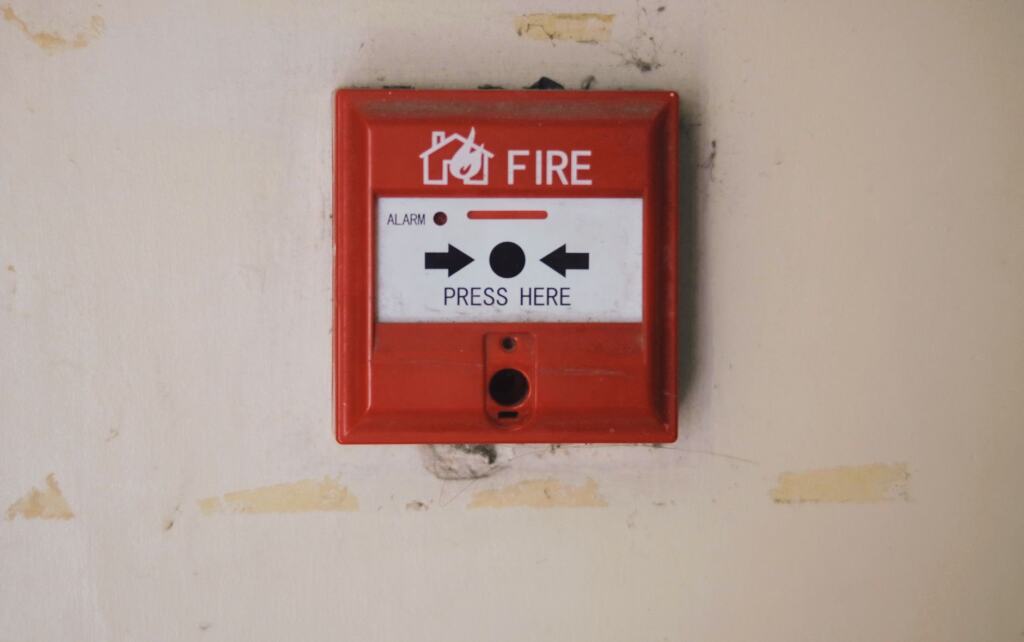
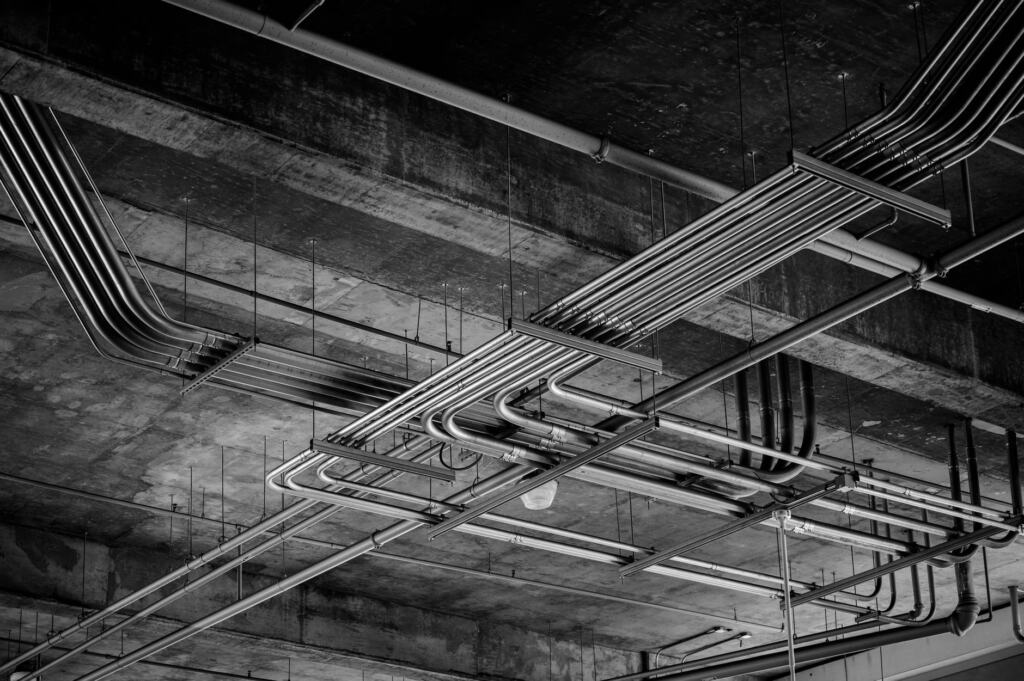
VESDA is a brand of aspirating smoke detection, a type of air sampling system. Instead of waiting for smoke to drift to a ceiling detector, it draws air from the room for analysis. That is why the pipe network on a data hall ceiling looks like plumbing but carries air, not water.
The practical benefit is speed. Fireline notes that wet pipe sprinklers are slower to activate than smoke detectors or air sampling systems, and that water mist and similar systems can be engineered for immediate activation using air sampling smoke detection. Fast detection is what lets a gas system discharge in the seconds-to-minutes window rather than after a fire has built heat.

Detection is only half the job, so the next question is what the system releases once it triggers.
Clean agents and FM-200 in the data center
FM-200 is a clean agent: an electrically non-conductive gas that leaves no residue. Fireline describes clean agents as electrically non-conductive gaseous fire extinguishing agents that do not leave a residue upon evaporation, and names FM-200 and Novec 1230 as the most common. Because the gas does not conduct electricity or leave a film, powered equipment can stay in the room during and after discharge.
Dataspan identifies two primary clean agent families, fluorinated ketones and halocarbons. Clean agent systems are designed to discharge before a fire reaches a heat or flame level, which is the key difference from sprinklers. Johnson Controls adds that halocarbon or inert gas systems extinguish fires quickly without harming people or leaving residue.
Why gas takes less space
Gas systems require less space than water-based systems, which need pumps and tanks, according to the same Johnson Controls material. In a hall where floor area is already committed to racks and cooling, this matters when choosing between a gas-only design and one that includes water.
Environmental considerations
Environmental impact is part of agent selection. Johnson Controls states that inert gases have low or no environmental impact, and that advanced halocarbon agents such as FK-5-1-12 offer negligible global warming potential. A buyer comparing agents should therefore ask about the specific agent’s environmental profile, not just its fire performance.
Inert gas suppression
Inert gas suppression puts out fire by lowering the room’s oxygen content. Dataspan explains that inert gases suppress fire by lowering a room’s oxygen content, which differs from the clean agent approach of stopping a fire before it builds heat. Like clean agents, inert gases avoid water and liquid chemicals, which is why Rotarex lists inert gases or clean agents as the way to avoid damaging expensive electronic equipment.
Discharge itself can hurt hardware. Rotarex describes a silent nozzle in its INEREX system designed to protect delicate drives and data against sound damage during discharge. If a hall contains spinning disks, ask whether the proposed nozzles are designed with sound in mind.
Pre-action sprinklers as the water-based layer
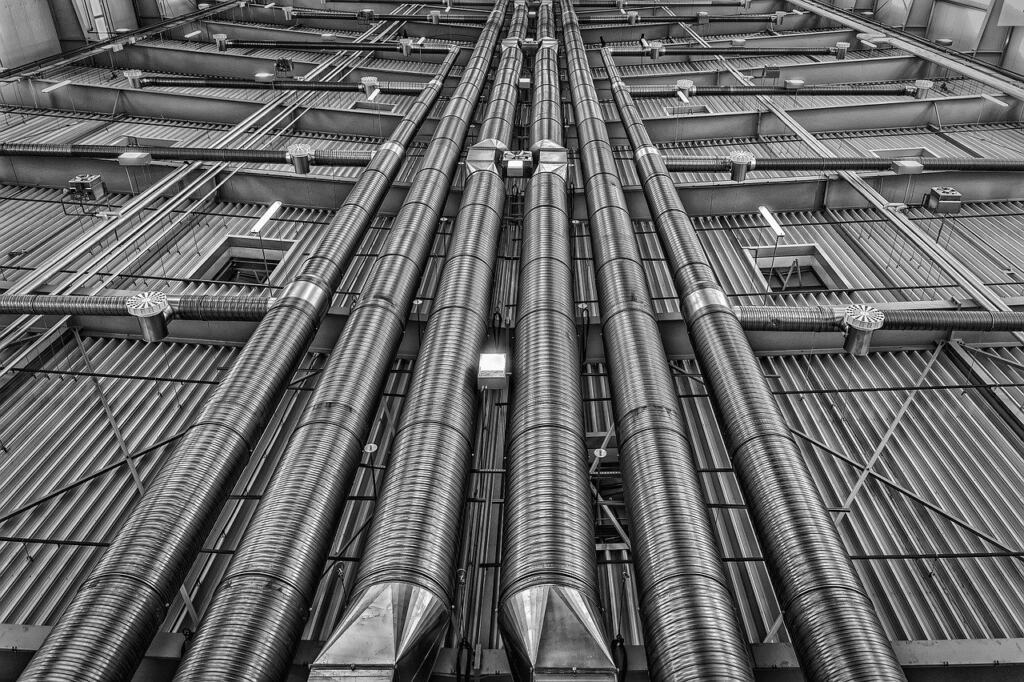
A pre-action sprinkler system keeps water out of the pipes until two things happen. Fireline lists these as activation of a smoke detector and significant heat generation to fuse a sprinkler head. That double condition reduces the chance of an accidental release, which matters because Fireline also warns that leaks, mechanical damage and inadvertent discharges pose as much threat to sensitive electrical equipment as a fire.
The limitation is protection for the equipment itself. Fireline says pre-action sprinklers do little to protect sensitive electronic equipment or prevent costly business downtime, and Johnson Controls notes that water-based systems control fires effectively but may damage equipment. Cleanup and downtime costs can be significantly higher with water than with gas.
Water mist as a middle option
Water mist systems use 70%-90% less water than traditional sprinkler systems, according to Fireline, and can be paired with air sampling detection for immediate activation. They suit operators who want water-based protection with a smaller wet footprint, though the evidence here supports the water saving rather than a guarantee of equipment safety.
Comparing gas, inert gas and pre-action sprinklers
The difference between pre-action sprinklers and gas suppression comes down to trigger, speed and what is left behind. Gas acts on early smoke and finishes the job quickly. Pre-action sprinklers wait for smoke plus heat, so they act later and leave water.
| System | How it acts | Main trade-off | Planning use |
|---|---|---|---|
| Clean agent (FM-200, Novec 1230) | Gas discharged early, before heat or flame builds; no residue | Needs gas storage and a sealed protected space | Primary protection for occupied, equipment-dense halls |
| Inert gas | Lowers the room’s oxygen content | Low or no environmental impact; discharge design, including sound, needs attention | Suits operators prioritising environmental profile |
| Pre-action sprinkler | Water released after smoke detection plus heat fuses a head | Water may damage equipment; higher cleanup and downtime cost | Backup layer where gas alone is not the whole design |
Comparisons drawn from Johnson Controls and Fireline.
The systems are not rivals so much as layers. Stream Data Centers notes that gaseous systems may be installed to extinguish a fire before a sprinkler system engages. Choose gas where the priority is protecting running equipment, and keep sprinklers where a water-based backup is wanted for a fire that heat alone can reveal.
Passive protection around the active systems
Active suppression works best inside a building designed to contain fire. Stream Data Centers points out that passive protection is equally important, including physical firewalls that restrict a fire to one part of the facility. A strong detection and discharge design in one hall is less valuable if a fire can spread freely to the next.
For customers choosing where to host, this is a useful question to put to a provider, particularly when evaluating what is colocation hosting arrangements where several tenants share a building. Likewise, how do data centers connect to the internet is a separate resilience question, but fire containment and network paths both determine how much of a site an incident can take offline.
Frequently asked questions
Is gas suppression safe for people in the room?
Fireline says clean agents do not pose a threat to equipment or people in the room, and Johnson Controls says halocarbon or inert gas systems extinguish fires without harming people. Evacuation procedures still apply to any discharge.
Is FM-200 the only clean agent used?
No. Fireline names FM-200 and Novec 1230 as the most common, and inert gases offer a different approach based on lowering oxygen.
Why not simply rely on sprinklers?
Sprinklers rely on heat, so they act after gas systems would have, and water can damage equipment and raise cleanup and downtime costs. They remain useful as a backup layer.
How fast does a gas system discharge?
Johnson Controls states that gas systems detect smoke early and discharge within seconds to minutes. The exact time depends on the system design.